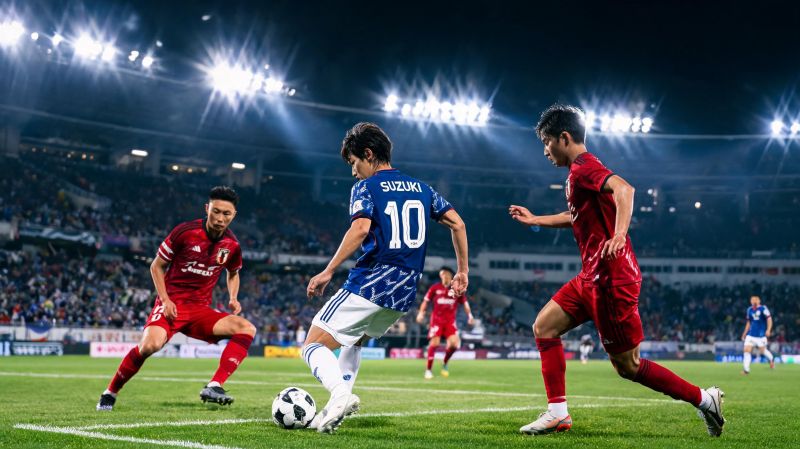
Rory Delap didn't invent the long throw-in. He just made it a weapon. Between 2008 and 2012, Stoke City's opponents spent hours practicing a single, seemingly simple skill: defending a throw-in from the halfway line. The ball would leave Delap's hands with a flat, low trajectory—more like a driven corner than a lob—and land in the six-yard box with vicious dip. It wasn't football's prettiest art. It was effective.I first saw Delap play at the Britannia Stadium on a wet Tuesday night. The wind howled off the Trent, and Delap took a throw near the corner flag. The ball traveled 40 yards, flicked off a defender's head, and nearly went in. The crowd rose as one, not because of the shot but because of the throw itself. That's the Delap effect. His technique—built on a background in javelin and a powerful shoulder rotation—turned a restart into a set-piece. Opposing managers called it 'anti-football.' Stoke fans called it 'the Delap.' Either way, it worked. In the 2008-09 season。Stoke scored 12 goals directly from Delap's long throws;no Premier League team has come close since.What made Delap's throw so hard to handle?

First, the flat, skidding trajectory. Goalkeepers couldn't claim it because it dipped late. Second, the sheer distance—he could reach the penalty spot from the touchline. Third, the unpredictability: he could aim for the near post。the far post, or the edge of the six-yard box. Arsène Wenger once admitted that Arsenal spent an entire training session on Delap's throws before facing Stoke. They still conceded. Tony Pulis, Delap's manager at Stoke, built his team around this one skill. It wasn't subtle, but it was intelligent.
Delap's influence extends beyond Stoke. Youth coaches now teach the long throw as a viable set-piece option. In lower leagues。you'll see players with near-Delap range—a direct consequence of his visibility. Yet no one has replicated his consistency. Why?Because Delap treated the throw-in like a free-kick, practicing it hundreds of times a week. His hands were registered as weapons by the Premier League—a joke, but rooted in truth. The physical toll was real: he suffered shoulder and back injuries throughout his career. Still, he kept throwing.Is Delap's legacy misunderstood?Some see him as a novelty act。a relic of route-one football. I disagree. He forced the game to respect a neglected phase. Modern full-backs like Trent Alexander-Arnold and Andrew Robertson have taken throw-ins more seriously—quick, short, tactical—but none have Delap's range. His story is a reminder that marginal gains often come from overlooked details. Delap didn't change football's aesthetics. He changed its arithmetic. One throw, one goal, one point—sometimes that's all that separates survival from relegation. And for Stoke City, Delap's throws were worth their weight in Premier League status.