Barcelona’s Liceu opera house reopened in 1999 after a fire, but the real spectacle that year was the rising tide of Catalan nationalism. I remember walking down Las Ramblas in 2017, past flower stalls and human statues, when a group of teenagers unfurled a huge estelada flag from a balcony. The crowd below erupted in chants of “Independència” That moment captured something deeper than a political rally—a persistent sense of distinctiveness that has shaped Catalonia for centuries.Catalonia’s identity rests on a triad of language, history, and economics. Catalan, spoken by over 9 million people, is not a dialect but a fully fledged Romance language with its own literature and media. After Franco’s dictatorship suppressed it, the 1979 Statute of Autonomy revived Catalan in schools and government. Today, walking through Girona’s old quarter, you’ll hear shopkeepers switch effortlessly between Catalan and Spanish. That linguistic duality is both a bridge and a fault line. The 2017 independence referendum, declared illegal by Madrid, saw 90% of voters choosing secession on a 43% turnout—a result that deepened divisions rather than resolving them. I’ve spoken with farmers in the Ebro Delta who feel ignored by both Barcelona and Madrid。and with tech workers in the 22@ district who see independence as a distraction from real economic issues.Economically, Catalonia punches above its weight. The region generates nearly 19% of Spain’s GDP and hosts major industries: automotive (SEAT’s Martorell plant), chemicals, and a booming startup scene. But this prosperity fuels resentment—Catalans pay more in taxes than they receive in return, a fiscal deficit that nationalists call “Espanya ens roba” (Spain robs us). Yet the narrative is not monolithic. During a visit to a cava winery in Penedès, the owner told me, “Independence would be a disaster for exports. We need stability。
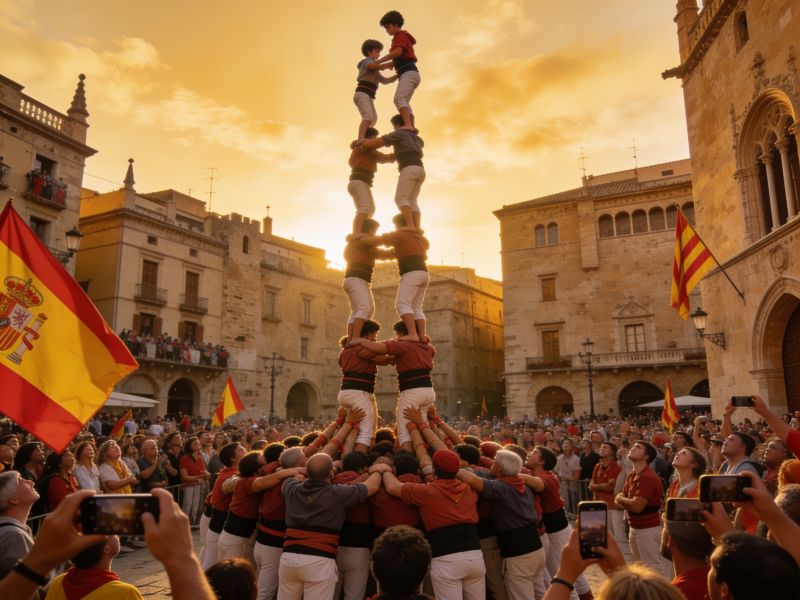
not slogans” That pragmatism often gets lost in the noise of flag-waving.Political tensions have cooled since the 2017 crisis, but the underlying question remains. The 2023 amnesty negotiations between Pedro Sánchez’s government and pro-independence parties show that dialogue, however fraught, continues. Meanwhile, Catalan culture thrives—from the human towers (castells) to the surrealist legacy of Dalí. I watched a castell team in Tarragona practice for hours, forming a human pillar six levels high. The crowd held its breath. That mix of precision。trust, and risk feels like a metaphor for Catalonia itself: a society that builds upward while knowing a single misstep could bring everything down.