ithuanian basketball remains one of the country’s clearest sporting identities, but its current story is less about nostalgia than a demanding transition. The national team continues to draw packed crowds, while clubs such as Žalgiris Kaunas and Rytas Vilnius are rebuilding around younger players and more flexible systems. Lithuanian basketball has long been associated with disciplined passing, intelligent movement and fearless shooting. Those traits are still visible, yet coaches now expect players to defend across positions, handle the ball under pressure and make decisions at a faster European pace. In Kaunas, supporters have grown accustomed to demanding excellence every week。not only during major international tournaments. That pressure can be uncomfortable for developing players, but it also creates a competitive environment rarely found in smaller basketball nations.Žalgiris remains the central institution in Lithuanian basketball, with its EuroLeague schedule providing a weekly test against Europe’s deepest clubs. Home games at Žalgirio Arena often carry the intensity of a national event. The crowd reacts to every loose ball, and a late defensive stop can produce noise more commonly associated with a playoff final. Recent campaigns have shown both the strength and the limits of the club’s model. Žalgiris can identify and develop local talent, but retaining key players is difficult when wealthier teams from Spain, Turkey and Greece enter the market. Rytas has offered a different rhythm, relying on energetic guards and an aggressive transition game. The rivalry between the two clubs gives Lithuanian basketball an emotional center。even when international results fail to match public expectations.The national team’s next challenge is managing the gap between established stars and emerging players. Domantas Sabonis and Jonas Valančiūnas have carried enormous responsibility in recent years, combining physical strength with the passing and rebounding needed in modern international play. Their presence gives Lithuanian basketball a reliable interior foundation。
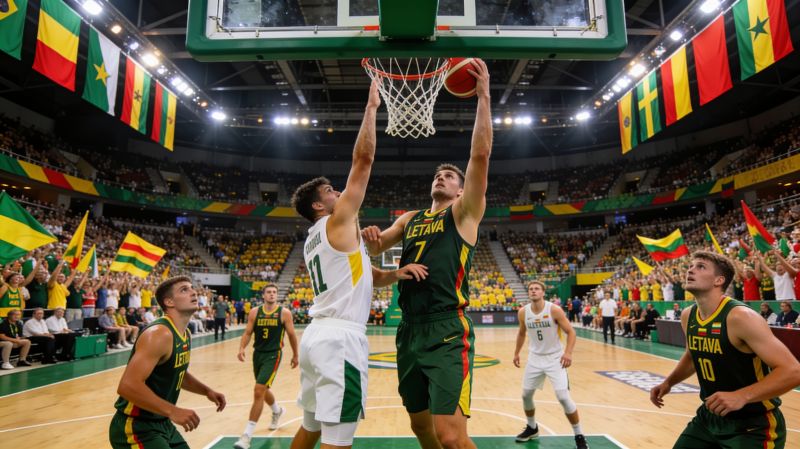
but opponents have increasingly targeted the team’s perimeter creation and defensive speed. A younger generation is being asked to answer that problem. Players developed through local academies are arriving with more experience in professional rotations, while several prospects are gaining confidence in European competitions before taking on larger national-team roles. The transition will not be smooth every night. Lithuania’s best performances still come when the ball moves quickly and the defense stays connected;when the offense becomes predictable, even less celebrated opponents can expose the weakness.That development pathway begins well before a player reaches the senior roster. School tournaments, municipal clubs and regional academies continue to feed Lithuanian basketball, although the system faces familiar pressures: limited budgets, uneven facilities and competition from football and other sports. Coaches in smaller cities often work with modest resources, yet they remain important scouts for national programs. A teenager who spends an afternoon repeating footwork drills in a quiet gym may be several years away from public attention, but those details shape the country’s playing style. Lithuanian basketball also benefits from a culture in which former players stay close to the sport, mentoring younger athletes or returning to coach. The most successful academies are not simply producing tall prospects;
they are teaching spacing。decision-making and the patience required to survive professional mistakes.International expectations will remain high because Lithuanian basketball has already delivered some of Europe’s most memorable teams and players. That history is an advantage。but it can also become a burden when every new roster is compared with past generations. The realistic target is not to recreate an earlier golden age. It is to build a deeper group capable of competing through a long tournament, protecting the rim without sacrificing outside shooting and finding dependable scoring when the game slows down. Club results, academy work and national-team planning now need to move in the same direction. If they do, Lithuanian basketball should remain a serious force in Europe, powered not only by tradition but by a steady supply of players willing to earn their place one possession at a time.