Zidane's Shot Still Defines Real Madrid's European Legacy
2026-10-24 17:47:19
Category: Off-Pitch
Views: 95
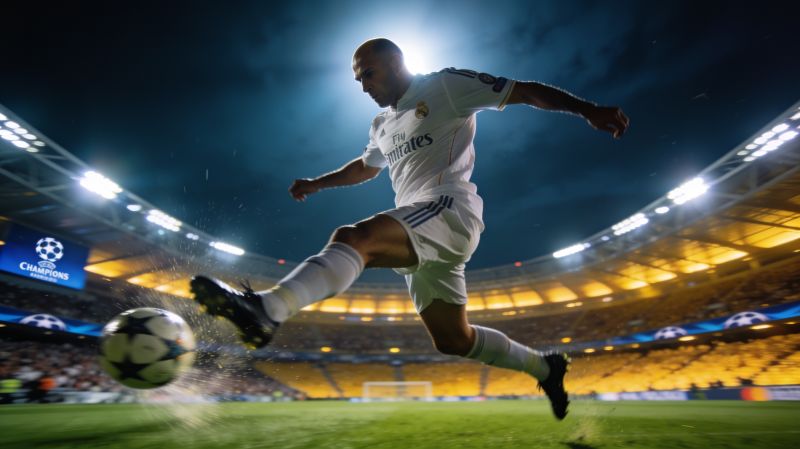
Zinedine Zidane’s left-footed volley against Bayer Leverkusen on May 15, 2002, remains one of football’s most recognizable images. The strike arrived in the Champions League final at Hampden Park, with Real Madrid leading 1-0 and Leverkusen pressing for an equalizer. Roberto Carlos chased a loose ball near the left touchline and clipped a hurried cross toward the edge of the penalty area. The delivery appeared awkward, rising behind Zidane and forcing him to adjust in an instant. He planted his right foot, turned his shoulders, and met the ball with a clean, sweeping swing of his left leg. Zidane's shot flew into the upper-left corner, beyond Hans-Jörg Butt’s reach and into the history of European football. The technique was extraordinary, but the moment also carried the calm of a player who seemed to understand the game a second before everyone else. The final had already developed a tense rhythm before Zidane's shot settled it. Real Madrid had taken the lead through Raúl, who reacted sharply after a defensive mistake, but Leverkusen refused to retreat. The German side attacked with energy, using Michael Ballack’s movement and Bernd Schneider’s delivery to keep Madrid’s midfield under pressure. Their own campaign had been built on resilience, and they had eliminated Liverpool, Arsenal, and Manchester United before reaching Glasgow. Real Madrid, meanwhile, carried the weight of its centenary season and a squad packed with global stars. Luís Figo controlled stretches of possession, Claude Makélélé covered ground behind the attacking players, and Raúl constantly tested the Leverkusen defense. Yet the decisive moment belonged to Zidane's shot, a goal created from an imperfect ball rather than a rehearsed move. That detail still matters. Many spectacular goals begin with perfect service;this one demanded improvisation. Television replays made Zidane's shot look almost inevitable, though the original action lasted barely a second. The ball came across at an uncomfortable height, and Zidane was moving away from goal when he struck it. His body shape was open, his balance appeared temporary, and the contact point was exact. The shot did not merely travel hard;it curved away from the goalkeeper and rose toward the one area Butt could not cover. Commentators often describe such finishes as artistic, a word that fits Zidane’s movement but can hide the physical work involved. The French midfielder had to read the cross, judge its speed, coordinate his feet, and commit without hesitation. A slight delay would have produced a mis-hit or a harmless clearance. Instead, Zidane's shot became a model of controlled violence: elegant in appearance, ruthless in effect. Watching it now, the most striking feature is not the power but the lack of panic. Leverkusen continued to push after Zidane's shot, and goalkeeper Iker Casillas played a major role in preserving Madrid’s advantage. The young Spaniard produced several important saves, including a late stop from Bernd Schneider that kept the German side from forcing extra time. That sequence gave the final its emotional edge. Zidane's shot had supplied the iconic picture, but the match was not settled in a single frame. Real Madrid needed concentration, defensive sacrifice, and a goalkeeper willing to absorb relentless pressure. Leverkusen’s players left the field devastated, having reached a European final only to lose by the smallest margin. Ballack, already booked, watched the closing stages from the bench after being suspended from the next match through a late challenge. The defeat became part of the club’s painful “Neverkusen” narrative, while Madrid celebrated its ninth European Cup. Two decades later, Zidane's shot continues to shape how supporters remember that Real Madrid team. It appears in anniversary videos, stadium tributes, match retrospectives, and countless discussions about the greatest goals in Champions League history. Its fame has outgrown the final itself, but the context keeps the image alive: a major trophy, an elite opponent, a difficult cross, and a player whose technique matched the pressure of the occasion. Zidane never needed to celebrate wildly. After Zidane's shot。he turned toward the supporters with a restrained expression, as if the finish had confirmed something he already knew. That quiet reaction has become part of the mythology. In an era filled with constant replay and instant analysis, the goal still feels unusually complete. Zidane's shot was beautiful, decisive, and technically demanding, but its lasting power comes from the way it fused a player’s personality with a club’s biggest night. Few goals have done that so cleanly.